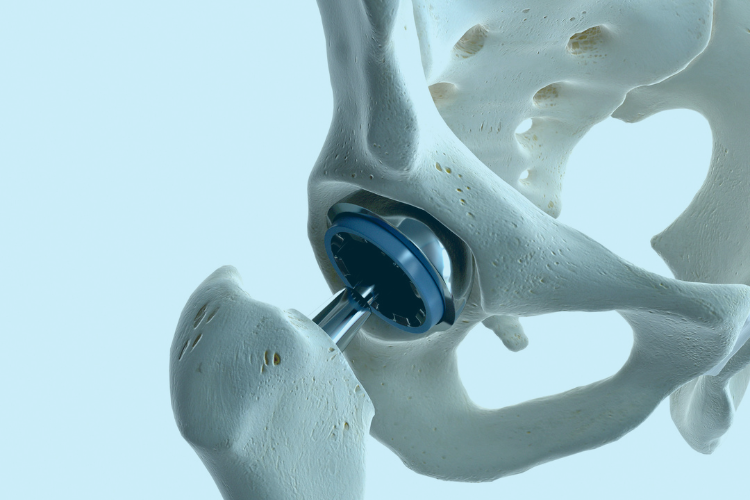
Concerns have been raised recently about implants used in hip replacement surgery which contain cobalt-chrome. This follows a report from France which suggested that there could be a link between the use of cobalt-chrome femoral head implants (used at the top of the thigh bone) and possible increased health risks. The French researchers pointed to an increased risk of dilated cardiomyopathy and heart failure.
Cobalt-chrome is commonly used in orthopaedic implants so this report rang alarm bells across the orthopaedic community. If the material was found to be linked to increased health risks, this would have significant implications for the millions of joint replacement surgeries carried out each year.
In the UK alone, there are more than 81,000 hip replacements carried out each year. Worldwide over two million total hip replacements take place annually.

Orthopaedic surgeons welcome Bristol study
For this reason, a follow-up study by the University of Bristol – which was published in The Bone and Joint Journal in 2022 – has been warmly welcomed by orthopaedic surgeons worldwide as it provides much-needed reassurance to patients and healthcare professionals alike.
Research aims
A team of researchers from Bristol set out to examine whether cobalt-chrome containing implants used in total hip replacements were associated with an increased risk of all-cause mortality as well as neurodegenerative disorders, cancer and heart outcomes. They used data from the National Joint Registry linked to NHS hospital inpatient information for 374,359 patients who had undergone a primary total hip replacement with up to 14.5 years follow-up. (The term ‘primary’ simply means it was the first hip replacement. Implants generally last 15-20 years and, once they wear out, the patient will require a ‘revision joint replacement’.)
Methodology
The Bristol research team excluded any patients with bilateral total hip replacements, knee replacements or who underwent joint replacement surgery for any reason other than osteoarthritis. Patients under the age of 55 were also excluded, along with any patients who had already been diagnosed with any of the health issues in question. The implants were grouped under those containing cobalt-chrome and those without cobalt-chrome.
Once the research team had identified the patients to be studied, they examined whether total hip replacement operations using cobalt-chrome containing implants were associated with an increased risk of all-cause mortality, neurodegenerative disorders, cancer or heart outcomes.
Forty-two percent of the research sample (158,677 patients) had been given an implant containing cobalt-chrome. Among the entire sample there were 47,963 deaths, 35,720 cancers, 27,332 heart outcomes and 22,025 neurogenerative disorders.
Findings
The research team found no evidence that patients who had been given an implant containing cobalt-chrome had higher rates of any of the health conditions in question. They stated that adverse effects of exposure to cobalt-chrome may take a long time to develop over the life of the patient and demonstrate small effect sizes.
Conclusions
This led them to conclude there is no association between the use of cobalt-chrome containing implants in total hip replacement and the risk of all-cause mortality, clinically meaningful heart outcomes, cancer or neurodegenerative disorders in the 10 years plus after surgery.
This can help to reassure patients who have undergone – or are due to undergo – surgery that the procedure is safe and is not associated with any significant systemic effects linked to the implant. Hip replacement surgery has life-changing benefits and Prof. J Queally is pleased to be able to offer this reassurance.
If you would like to talk about hip replacement surgery or have severe hip pain and would like to discuss treatment options, contact us for more information.