Surgical team faces in masks performing knee surgery

Robotic Arm-Assisted Partial Knee Replacement Achieves Better Joint Balance Compared to Conventional Approaches

During knee replacement surgery, orthopaedic surgeons use different approaches to quantify and balance soft-tissue tension in the joint. Why is soft-tissue balancing important? Traditionally, they have relied on a conventional jig-based sensor (which uses mechanical cutting guides called jigs, plus alignment rods and the surgeon’s skill) to assess whether or not the soft-tissue tension balance…

Older couple walking in the woods

Robotic Arm-Assisted Total Knee Replacements: Study Reveals Impact on Knee Pain but not Function

More and more patients undergoing a total knee replacement are opting for robotic arm-assisted surgery. In this article, we’ll look at what this entails and consider a recent study, published in the Bone Joint Journal, which explored whether this type of surgery makes a difference to outcomes when compared with conventional total knee replacements. What…

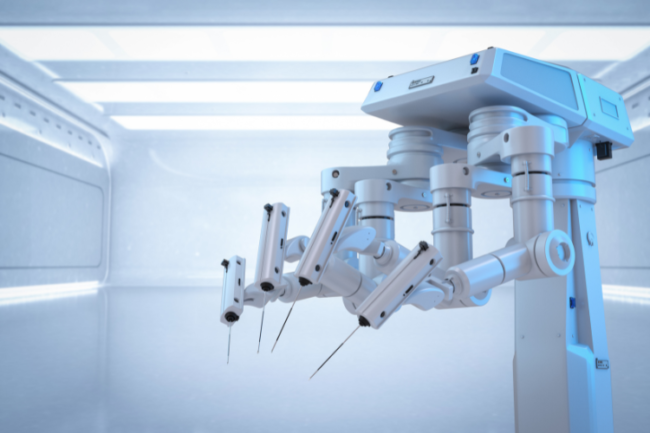
Robotic arm in a clinical setting

Research Study into Robotics in Joint Replacement Surgery

Mako robotic-arm assisted joint replacements have been around for the last 17 years. To date, more than a million Mako procedures have been carried out around the world and there have been 330 published, peer-reviewed studies. Impressive data Mako SmartRobotics technology has been hailed as a major breakthrough in joint replacement surgery and the data…