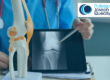
A total knee replacement is surgery to remove the damaged surface of your knee joint and replace it with an artificial joint made of metal and plastic. This is referred to as a prosthesis and it is designed to perform the same function as a healthy knee joint.
Who can have total knee replacement surgery?
A total knee replacement is offered to patients experiencing severe knee pain and stiffness due to a condition like arthritis. Normally, surgeons recommend less invasive forms of treatment, such as painkillers, therapeutic injections and bracing, before suggesting surgery. This is because all forms of surgery carry risks and, while knee replacement surgery is a routine procedure, nevertheless it is major surgery with a significant rehabilitation period.
What is a Mako knee replacement?
Leading edge orthopaedic surgeons now offer Mako robotic arm-assisted total knee replacements as this approach offers considerable benefits for patients compared to conventional knee replacement surgery.
The Mako system was developed by Stryker to support the skill and expertise of orthopaedic surgeons. It consists of an innovative computer software programme and a state-of-the-art robotic arm which is used by the surgeon in the operating room.
Prior to surgery, patients undergo a CT scan of the damaged knee joint, which is used to create a 3D virtual model of the joint. No two joints are exactly the same, so having a detailed 3D model enable the surgeon to create an accurate and detailed surgical plan even before the patient reaches the operating theatre. The plan takes into account the patient’s unique bone structure, the location of diseased tissue and the severity of any damage, joint alignment and the condition of surrounding bone and tissue. Using this information, the surgeon can determine the right size, placement and alignment of the prosthetic knee joint. They can also identify areas of damaged and diseased tissue that need to be removed and healthy tissue that can remain intact.
Once the patient is on the operating table, the surgeon guides the Mako system’s robotic arm to remove arthritic bone and cartilage from the knee joint. The system features Mako’s unique Accustop technology which creates a virtual boundary, offering tactile resistance that helps the surgeon stay within the boundaries identified in the surgical plan. Real-time data from the Mako system allows the surgeon to adjust the movement and tension of the knee joint, making small adjustments to the surgical plan if needed.
After surgery, patients are offered support to rehabilitate, with a programme of exercises created by their physiotherapist to build strength, mobility and function in the new joint.
History of Mako
The first Mako procedure was performed in 2006 and, since then, the system has continued to evolve and improve. More than 300,000 Mako procedures have been performed. Mako is the subject of more than 145 published peer-reviewed studies and more than 850 Mako systems have now been installed in 26 countries around the world, including here in the UK.
How do patients benefit from Mako?
Having a detailed pre-operative plan means that surgeons can plan with pinpoint precision, helping to preserve healthy bone and soft tissue wherever possible. Greater precision leads to better and more consistent results and because patients spend less time on the operating table, recovery times tend to be faster. Mako surgery tends to produce less soft tissue damage and, because there is a detailed pre-operative plan using the patient’s unique anatomy, the prosthetic implant tends to fit better, increasing comfort and and improving long-term performance. Mako patients report higher satisfaction scores and, according to surveys carried out six months after surgery, they have lower pain scores than patients who undergo conventional joint replacement surgery. Preserving healthy bone and soft tissue means that if patients ever need follow-up surgery to replace a worn-out implant (called a revision knee replacement), the risk of complications may be lower.

Am I suitable for Mako robotic assisted joint replacement surgery?
Not everyone who is experiencing knee pain is suitable for a Mako total knee replacement, as explained above. In some cases, you may be offered a less invasive form of treatment. Contact your orthopaedic surgeon who will be able to provide tailored advice about your suitability for the procedure.