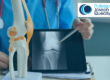
A total knee replacement is a surgical procedure offered to people with severe knee pain and loss of mobility. This may be due to a serious injury, such as a fracture, or most commonly because of a degenerative condition like osteoarthritis. It involves removing the damaged knee joint and replacing it with a prosthetic (artificial) implant.
While a total knee replacement is a major surgical procedure which typically has a recovery time of between six and 12 weeks, it is a routine operation that can significantly improve your quality of life.
In this article, we’ll focus on how to prepare for your total knee replacement surgery.
What’s the difference between a partial and a total knee replacement?
The knee joint is made up of three compartments – the medial compartment (inside of the knee), the lateral compartment (outside of the knee) and the patellofemoral compartment (front of the knee). Sometimes osteoarthritis just affects one part of the knee. In such cases, you might be offered a partial knee replacement. As the name suggests, with this type of surgery only part of the knee is replaced while the undamaged knee compartments are left intact.
If you are having a total knee replacement, it means the entire knee joint is damaged or diseased and needs to be replaced. The damaged joint is removed and replaced with an artificial knee that functions in a similar way to your natural knee joint. Your orthopaedic surgeon will advise you which type of knee replacement surgery is most suitable for you.
What happens during a total knee replacement?
During a total knee replacement, the orthopaedic surgeon removes the damaged cartilage covering the ends of the femur and tibia bones, along with a small amount of the bones themselves. These are then replaced with an artificial implant made of high-grade metal. For example, Professor Joseph Queally uses the Triathlon Total Knee System which features a single radius of curvature that increases the range of motion of the artificial joint, making it function more like a natural knee joint. This is most noticeable when doing everyday activities like walking, climbing the stairs and straightening the knee.
Preparing for Total Knee Replacement Surgery
Depending whether you are having your total knee replacement done privately or on the NHS, you may have a wait of a few weeks or longer. Most private patients have their surgery within four to six weeks while for NHS patients the wait can vary depending on the current size of the waiting list.
During the time before your surgery, your orthopaedic surgeon will arrange for you to have a range of tests to make sure you are medically fit for the procedure. You will have an opportunity to ask questions about your surgery at this time and to raise any concerns so try jotting down anything that you want to talk about during your appointments.
Your surgeon will also talk to you about any medication that you’re currently taking. That’s because some type of medication can interfere with the healing process and you may be advised to stop taking it a few weeks before your surgery. You should also consider stopping smoking if you are a smoker as nicotine can increase the risk of post-surgical infection or deep vein thrombosis, as well as impeding healing. For patients who are overweight, losing weight prior to surgery could make a difference to how quickly you recover, as well as your risk of post-surgical complications.
As well as preparing your body for surgery, you will also need to prepare your home. Your surgical team will provide a list of suggestions, which might include moving your bedroom onto the ground floor of your home to avoid the need to climb stairs, removing anything that could cause you to trip or fall (such as rugs or trailing cables) and filling your freezer with pre-cooked meals so you don’t need to worry about cooking for a week or so after surgery.
What are Mako Total Knee Replacements?
You may hear the term ‘Mako Total Knee Replacements’. This refers to a state-of-the-art system developed by Stryker and used by growing numbers of orthopaedic surgeons when carrying out total knee replacements. It consists of an innovative computer software programme that can create highly detailed 3D images of the patient’s knee joint using CT scans. These are used to develop detailed pre-operative plans. On the day of the surgery itself, the orthopaedic surgeon uses Mako’s unique robotic arm to support them to remain within the boundaries of the pre-operative plan.
If you are experiencing severe knee pain and would like advice on treatment options, or if you’re due to have knee replacement surgery and would like to understand the difference between total and partial knee replacements, as well as Mako total knee replacement surgery, contact us for information and advice.