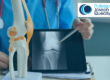
If you are experiencing pain that gets worse when you run, jump and walk, or pain that is exacerbated by bending and straightening your leg you may be suffering from Jumper’s Knee.
Also referred to as Patellar Tendonitis, Jumper’s Knee causes pain, swelling or a dull aching sensation at the top of the shinbone under the kneecap. Your knee may feel stiff and hard to move and certain movements may make it worse, including walking downstairs or squatting.
The symptoms of Jumper’s Knee tend to worsen over time. At first, you may experience mild pain after physical activity however, in time, the pain may become more noticeable during everyday activities and eventually it may become more severe. Left untreated, Jumper’s Knee can become debilitating and even sitting may be painful.
What causes Jumper’s Knee?
Jumper’s Knee is an overuse injury caused by repeatedly overloading the patellar tendon. This can be the result of doing too much or increasing the intensity of your workout too quickly. Sports that involve repeatedly jumping or sprinting – especially on hard surfaces – place the tissues of the patellar tendon under stress and over time tiny tears can develop.
Certain sporting activities, such as football, running, high jump and long jump, gymnastics, volleyball and basketball, increase your risk of developing Jumper’s Knee. You may be particularly prone to the condition if you are over the age of 40 or you have an intensive training regime (for example, you are competing at a professional level). People with conditions like diabetes, rheumatoid arthritis or lupus may also be susceptible.
Diagnosing Jumper’s Knee
We recommend seeking a diagnosis if you are experiencing a dull aching sensation around the kneecap that continues even after you finish your workout, or if you are getting worsening knee pain, particularly after making sudden movements.
Your doctor will carry out a physical examination and ask you about your symptoms and when you first began experiencing them. They may send you for an X-ray to rule out other possible causes of knee pain and you may also need an ultrasound or MRI scan to assess any damage to your patellar tendon.
Treating Jumper’s Knee
Once the condition is diagnosed, the recommended treatment plan will depend on how severe your symptoms are and your general state of health. Mostly we recommend conservative treatment to help you manage the symptoms of Jumper’s Knee. One of the best things you can do is to rest the affected knee, as continuing to use the tendons can cause worsening damage. Applying ice can help to reduce swelling and relieve pain. Ideally, apply an ice pack to the affected area for 15 minutes at a time, several times a day. Avoid applying ice directly onto the skin.
Taking over-the-counter painkillers and anti-inflammatories can help to alleviate mild pain and it may be helpful to wear a knee brace to support the knee while it is healing. A physiotherapist will be able to develop a programme of stretching and strengthening exercises to build strength and flexibility in the injured tissues and relieve some of the pain. It is rare to need surgery for Jumper’s Knee, however, if you have a tear to the patellar tendon, a surgical repair may be needed. Your orthopaedic surgeon will advise you on the best way forward.
It is important to be patient and not to rush your return to exercise, as going back too soon could set back your recovery and may result in a more serious injury. Typically, someone with mild Jumper’s Knee will start to feel better after a few weeks of rest, however, a more serious injury will take longer.
Preventing Jumper’s Knee
While it’s not always possible to prevent overuse injuries, taking simple steps to lower your risk is a sensible precaution. If you are competing in any kind of sport, make sure you warm up properly as this gives your muscles time to adapt, which reduces the chance of getting injured. Stretching the major muscle groups makes tendons and muscles more elastic which reduces the chances of tearing. Tight thigh muscles and hamstrings carry a particular risk of strain to the patellar tendon and so, too, can an imbalance in the strength of the muscles in your leg. Sports shoes should be well-fitting and in good condition. Finish off your workout with a cool down, which also helps to lower the risk of injury. It is worth remembering that poor technique can contribute to the risk of many types of injury so investing in professional coaching is advisable.
If you suspect you may have Jumper’s Knee and would like advice about diagnosing and treating the condition, contact us.