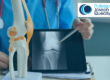
Your patella is your kneecap – the small bone that covers the front of your knee joint where the femur (thighbone) and tibia (shinbone) meet. It protects the joint and is designed to glide smoothly over the articular cartilage as you move your knee. Your patella can fracture in many different ways and treatment will depend on the type and seriousness of the break.
What causes patella fractures?
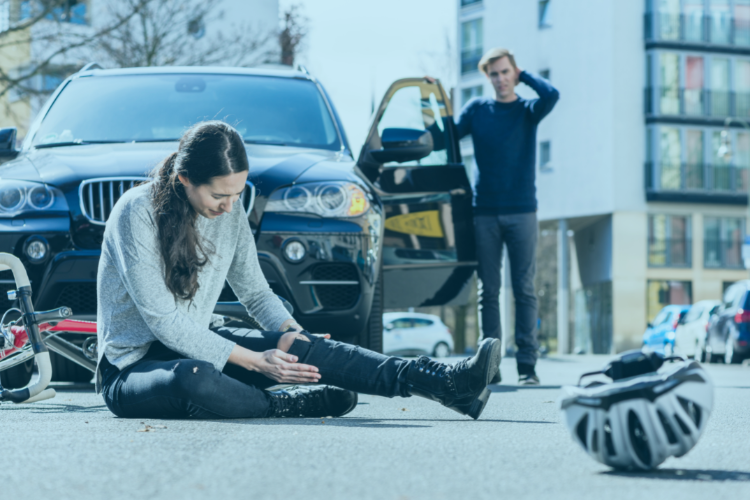
Patella fractures are normally the result of falling directly onto your knee or receiving a heavy blow – for example, during a road traffic accident if you hit your knee against the dashboard. If the quadriceps muscle in your knee suddenly contracts this can sometimes force apart the patella causing a fracture.

Symptoms of a patella fracture
If you fracture your patella, you will experience pain and swelling which may be severe. Your knee may appear bruised and you might not be able to put any weight on the affected leg. A patella fracture can make it impossible to straighten your knee.
Diagnosing patella fractures
 You should seek medical help if you suspect you may have fractured your patella. Your doctor will carry out a physical examination and press gently on your knee as they may be able to feel the rough edges of the broken bone through the skin. They will normally send you for an X-ray to confirm the diagnosis. Your doctor will also check for signs of hemarthrosis, which is when blood from the fractured bones pools inside your knee joint causing painful swelling. If you have hemarthrosis, the doctor may insert a drain to remove the blood and relieve the swelling.
There are different types of patella fracture and the X-ray will show which type you have. A stable fracture is where the pieces of bone remain correctly aligned, just with a small break in between them. If you have a displaced fracture it means the ends of the bone have been pulled apart and are no longer in alignment.
With this type of fracture you will normally need surgery to bring the pieces of bone back together. In some cases, the patella may shatter into several pieces. This is called a comminuted fracture. This type of fracture may be stable or displaced. An open fracture is where the skin is broken and a fragment of bone may poke through it. This type of fracture carries a high risk of infection and there is normally soft tissue damage, which can take a long time to heal.
Treating patella fractures
Stable patella fractures often heal by themselves without surgery. You will need to wear a cast or splint to keep your knee straight and prevent your leg from moving. In many cases you will be able to put weight on your leg while wearing your cast, but some fractures will need you to avoid putting weight on your leg for between six and eight weeks while the bones heal. Your orthopaedic consultant will advise you.
In the case of displaced fractures, you will normally need surgery. A fractured patella that is not properly aligned may not heal as the thigh muscles can pull the bone fragments out of place, preventing healing from taking place. If you have an open fracture you will need surgery as soon as possible to prevent infection from developing. During the procedure, the surgeon will clean the wound and the surfaces of the bone to reduce the risk of infection. The bones will then be aligned and fixed in place with metal plates, screws or wires. A figure-of-eight tension band may be used to press two pieces of bone together.
With comminuted fractures, your surgeon will remove any fragments of bone that are too small to be fixed back into place. The remaining patella bone will be reattached to the patella tendon and the kneecap will be reconstructed using screws, plates and wires.

Rehabilitation from patella fractures
If you fracture your patella, we recommend using an ice pack and keeping the leg elevated to reduce swelling. You will normally need painkilling medication for the pain which can be severe. Your physiotherapist will recommend exercises to help you rebuild strength and movement in your affected leg to prevent stiffness. It is important to do these exercises regularly.
Patella fractures can lead to post-traumatic arthritis, which is caused by damage to the articular cartilage which can result in pain and stiffness. There is also a risk of muscle weakness, chronic pain or permanent loss of motion within your knee.
The normal recovery time is three to six months. You may need to avoid certain activities in future such as deep knee bends or climbing ladders or stairs. Some people find that wearing a knee brace helps to support their damaged joint.
Preventing patella fractures
It can be hard to prevent a patella fracture as most are caused by a traumatic accident such as a fall or vehicle collision. If you have a condition like osteoporosis which weakens your bones, this can increase the risk of fractures including patella fractures. Your doctor will advise you on managing your condition to minimise the chances of broken bones.
If you have sustained a patella fracture, contact us for a diagnosis and treatment.